
News
Say Goodbye to “Traffic-Jam City” Pressure: Port Vila, Vanuatu Plans to Introduce a Traffic Light System!
With the development of Vanuatu's national economy and the acceleration of urbanization, the capital, Port Vila, is facing unprecedented traffic challenges. For a long time, this coastal city, filled with South Pacific charm, has been known for its leisurely pace of life. However, today, increasingly severe traffic congestion is becoming a persistent "worry" for local residents and the government.
Heavyweight News from Parliament: Traffic Governance to Face "Hard Measures"
According to a report by *The Voice of South Pacific*, during the third day of the first ordinary session of the Parliament of Vanuatu held on May 21, the Minister of Infrastructure and Public Utilities, Xavier Emmanuel Harry, officially presented the Road Traffic (Amendment) Bill.
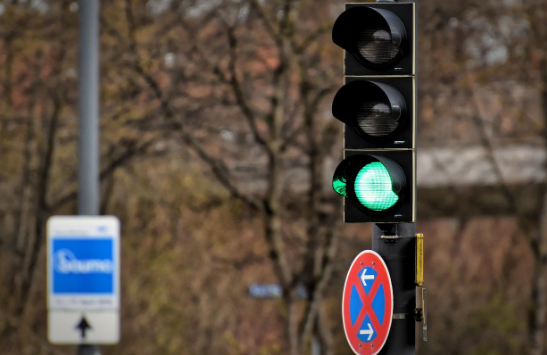
When explaining the necessity of the bill, Minister Harry revealed a highly anticipated signal: the government is seriously considering introducing a traffic signal light (traffic light) system at key intersections in Port Vila.

This statement marks a major transformation in Vanuatu's urban traffic management philosophy. In the past, traffic in Port Vila relied primarily on roundabouts and manual direction by traffic police. However, today, with a surge in private car ownership and rising public transport demand, traditional management models have proven to be inadequate.
Traffic Census by CTI Consulting
This decision by the government was not made on a whim. Minister Harry pointed out that as a supporting component of a key infrastructure project—the reconstruction and expansion of the Tagabe Bridge—the government had appointed CTI, a professional consulting firm, to carry out an in-depth traffic assessment and strategic planning.
CTI's preliminary research results show that traffic pressure in Port Vila is concentrated at several core nodes, particularly the main arteries connecting the airport, the industrial zone, and the city center. With the increase in population density, simple road widening can no longer fully resolve the bottleneck issues.
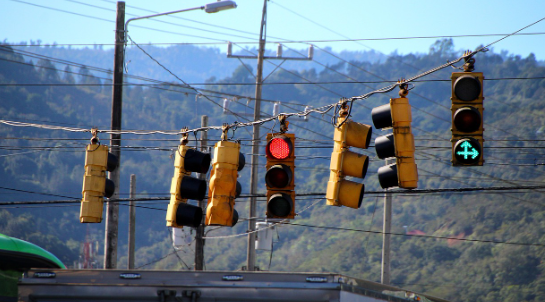
The report suggests that by installing a modern traffic signal light system, the temporal distribution of traffic flow can be optimized, thereby scientifically easing peak-hour congestion.
For Port Vila, the significance of introducing a traffic light system extends far beyond merely "relieving congestion."
First is the improvement of road safety. At intersections lacking signal guidance, vehicle lane-changing and cutting-in are frequent, which can easily trigger traffic accidents. The introduction of traffic lights will provide drivers with clear passage instructions, effectively reducing the risk of collisions at intersections and protecting the safety of pedestrians, especially school children, when crossing the street.
Second is the reshaping of urban order. As the gateway to Vanuatu, Port Vila's traffic conditions directly impact tourists' first impressions. Efficient traffic management is a hallmark of a modern city, and introducing automated control systems will help elevate the overall image of the capital.
Furthermore, this is an inevitable choice for promoting economic development. Traffic congestion translates to reduced logistics efficiency and rising fuel costs. By improving traffic flow, commute times for workers can be shortened and operational costs for businesses reduced, providing a more solid foundation to support Port Vila's commercial prosperity.
Although the introduction of a traffic light system holds promising prospects, Minister Harry also recognized that the implementation of this project requires the support of a legal framework, which is precisely the core purpose of submitting the Road Traffic (Amendment) Bill this time.