
News
Many Web3 Companies Are Choosing Vanuatu, and High-Net-Worth Individuals Have Long Reached a Consensus on Identity Configuration!
With the U.S. Securities and Exchange Commission (SEC) tightening its classification of digital assets, and the implementation of the European Union's Markets in Crypto-Assets (MiCA) regulation, a large number of Web3 enterprises are actively seeking jurisdictions worldwide that can offer both legal certainty and financial flexibility.

Vanuatu, as a long-standing offshore financial center, has precisely positioned itself in the digital assets sector in recent years by revising its legal framework. For Web3 founders, the combination of a Vanuatu company and Vanuatu identity has long been recognized as a highly efficient and compliant configuration.
The core demand of Web3 enterprises is the legitimacy of their legal status. For a long time, offshore jurisdictions have been criticized for legal ambiguity. Vanuatu officially incorporated virtual assets into its regulatory scope in 2021 by amending the Financial Dealers Licensing Act.

The "Class D" financial license introduced by the Vanuatu Financial Services Commission (VFSC) specifically targets Virtual Asset Service Providers (VASPs). This license permits enterprises to legally engage in the following activities:
Digital asset custody and management;
Exchange between virtual currencies and fiat currencies, or between virtual currencies;
Participation in and provision of financial services related to the issuance of digital assets.
This clear legal definition provides a compliant "safe haven" for Web3 projects (such as decentralized exchanges, asset management protocols, and NFT platforms).
Compared to the increasingly complex compliance audit requirements of Seychelles or the Cayman Islands, Vanuatu's Class D license strikes a balance between application efficiency and maintenance costs, enabling startups to establish recognized business entities in a relatively short timeframe.
The greatest obstacle faced by Web3 enterprises is often not the code, but fiat-to-crypto onboarding ("on-ramping") and offboarding ("off-ramping")—namely, the traditional financial system's exclusion of cryptocurrency practitioners. Even with a compliant company, if the founder's identity belongs to a high-risk region or a jurisdiction with strict foreign exchange controls, they will still face an extremely high rejection rate when opening personal or corporate accounts.
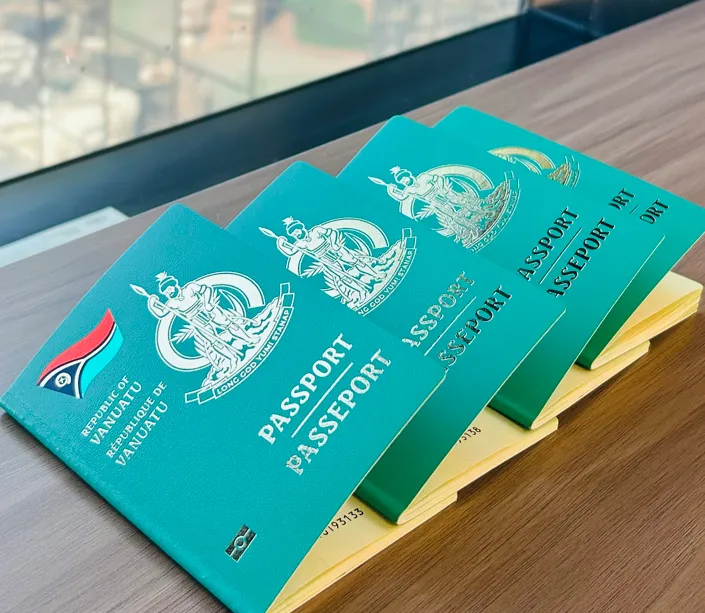
This is precisely one of the reasons why the Vanuatu Development Support Program (DSP) passport is highly favored.
By holding a Vanuatu identity and establishing substance locally (such as a lease, address, and utility bills), founders can more easily open accounts in crypto-friendly offshore banks or Southeast Asian financial hubs (such as Singapore and Hong Kong).
The processing time for Vanuatu's citizenship-by-investment program is typically within 1 to 2 months, and it does not require physical residency, which is highly compatible with the fast-paced and distributed nature of the Web3 industry.
Vanuatu has a deep relationship with Australia and New Zealand under the framework of the Pacific Agreement on Closer Economic Relations Plus (PACER Plus). For Web3 enterprises wishing to expand their business in the Asia-Pacific region, Vanuatu is not merely an offshore jurisdiction, but also a springboard to enter Oceania's financial circle.
Trends after 2026 show that Australia is strengthening its legislative support for digital assets.
In the future, Vanuatu citizens will hold significant geographical and policy advantages over applicants from other regions when applying for Australia's PEV (Pacific Engagement Visa) or establishing regional business collaborations. This dual-strategy configuration—enabling both forward expansion into major powers and fallback compliance—constitutes the long-term premium of Vanuatu identity.
Web3 enterprises establishing a presence in Vanuatu typically adopt a dual-structured approach of setup: registering an international company (IC) combined with the founder configuring a legal citizenship.
1. International Company (IC) Formation:
Requirements: At least one shareholder, and one director (of any nationality).
Privacy: The register of shareholders and directors is not publicly accessible, greatly protecting the privacy of the project promoters.
Processing Time: Registration is typically completed within 2 to 5 working days.
2. Citizenship-by-Investment Thresholds (2026 Standard):
Individual Application: Government contribution of approximately USD 130,000.
Family Application: Approximately USD 150,000 to USD 180,000, depending on the number of family members.
Due Diligence: Must pass rigorous screening by the Financial Intelligence Unit (FIU) to ensure the legitimacy of the source of funds and a clean criminal record.
3. Class D License Application (If Required):
Security Deposit: Approximately USD 50,000 (deposited in a local bank or designated institution).
Personnel Requirements: Must appoint a Compliance Officer with relevant industry experience.
Although Vanuatu offers a highly competitive environment, attention must still be paid to the substance of compliance during the configuration process.
With the advancement of global Base Erosion and Profit Shifting (BEPS) anti-tax avoidance rules, the government of Vanuatu has significantly strengthened ongoing background checks after 2026. This means that holders should maintain a clean global credit and legal record to ensure the continuous validity of their passport and corporate status.
Through Vanuatu's corporate law and citizenship-by-investment program, practitioners can establish a complete offshore legal structure within 30 to 60 days.
This structure not only resolves the most urgent tax and compliance classification issues, but also enables applicants to secure solid legal protections for the founding team's future international travel, asset management, and daily life through the acquisition of citizenship.