
News
[Policy Updates | Issue 21]: The Contest Behind Visa Quotas — Vanuatu’s Exclusion from Australia’s PEV Program Sparks Suspicions of Diplomatic Pressure!
Recently, the Australian Department of Home Affairs announced that registrations for its highly anticipated Pacific Engagement Visa (PEV) ballot will officially open on July 1.
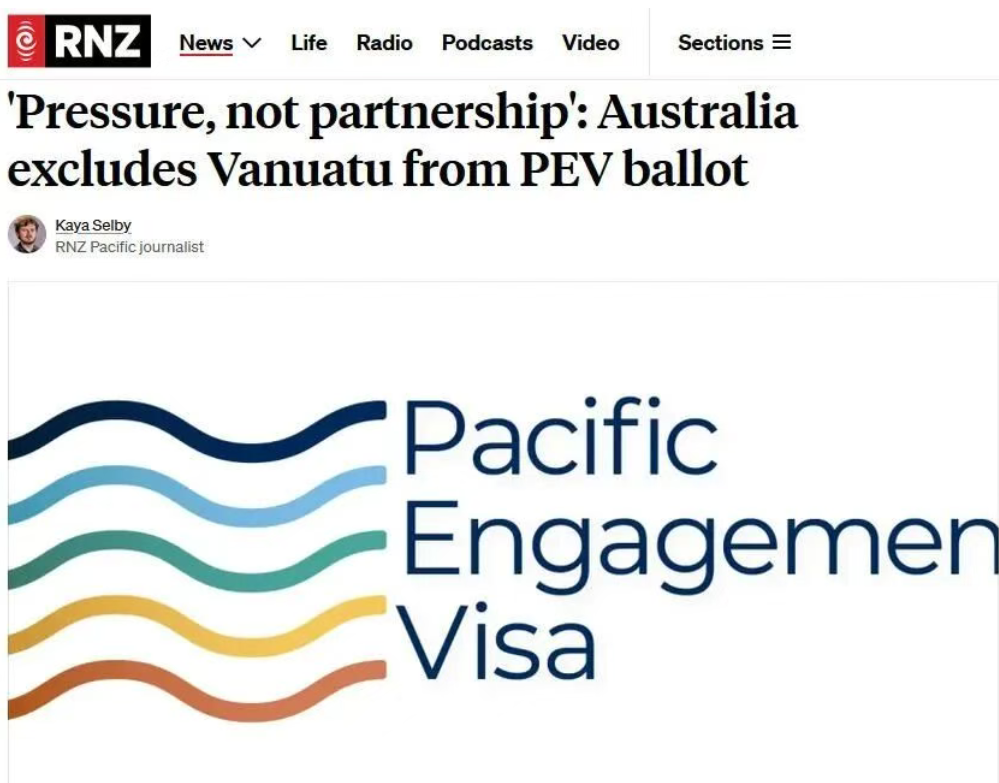
However, in the eligible countries list for the 2026-2027 program, which closely concerns the interests of Pacific Islanders, Vanuatu—which had participated in the program for the past two consecutive years—was excluded. This change has triggered widespread controversy over "political pressure" in the South Pacific region.
The Pacific Engagement Visa (PEV) is a key policy introduced by Australia for Pacific island countries, aiming to provide permanent residency (green cards) to up to 3,000 Pacific Islanders from 11 designated countries each year via a lottery ballot.
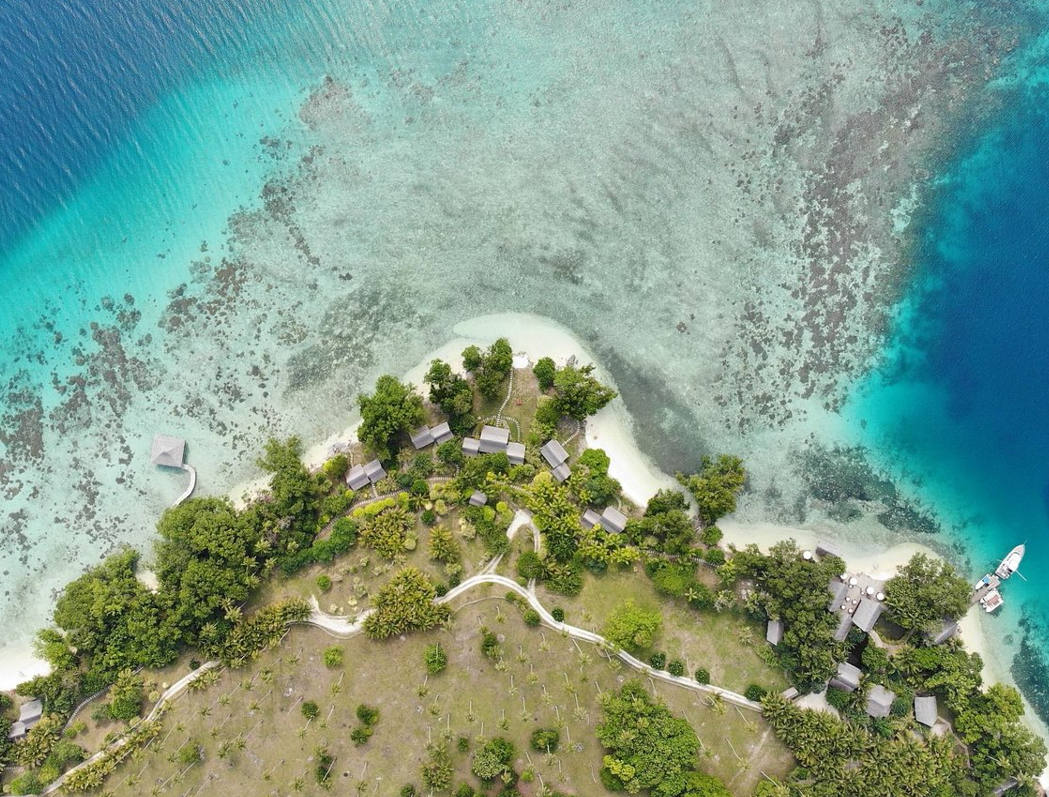
In the latest quota allocation, the treatment of different countries exhibits a distinct disparity.
Vanuatu and Nauru Excluded/Reduced: Vanuatu was completely removed from the list of eligible countries, losing its previously held quota; Nauru was likewise removed from the list, losing 100 places.
New Entrants and Doubled Countries: Tuvalu and the Marshall Islands joined for the first time, receiving 100 and 50 places respectively. Meanwhile, the Solomon Islands' quota doubled directly to 300 places—notably, just two weeks prior, Matthew Wale, Prime Minister of the Solomon Islands, had just concluded an official visit to Australia.
Outside observers generally believe that Australia's adjustment of the visa list is directly related to the hurdles encountered in its promotion of regional geopolitical security cooperation in the South Pacific.
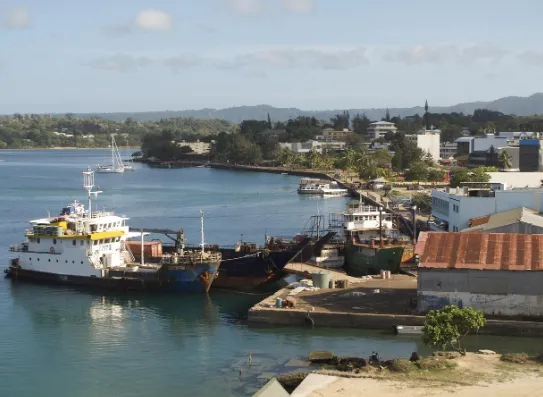
Currently, Australia is actively lobbying Vanuatu to sign the Nakamal Agreement.
Under the agreement, the two nations would enter into a ten-year security arrangement, with Australia committing AUD 500 million (approximately USD 350 million) in aid to Vanuatu. However, due to the sensitivities surrounding sovereignty, defense, and security, Vanuatu has remained cautious, leading to slow progress in negotiations.
Glen Craig, an advisor to the Vanuatu government, stated candidly on the social media platform LinkedIn that the tightening of visa quotas and the twists in the Nakamal Agreement negotiations share a highly notable correlation in timing.
Craig pointed out that Vanuatu has always clearly articulated its priorities in foreign affairs and regional cooperation—namely climate change and freedom of human mobility.
Australia's exclusion of Vanuatu from the list this time can hardly be interpreted as anything other than a pressure tactic of 'visas for agreement.' "This sends a signal that whether Ni-Vanuatu can obtain development opportunities depends on whether the government yields to Australia on security issues."

Craig's remarks reflect the skepticism within Pacific island public opinion regarding Australia's diplomatic slogan of a 'Pacific family.'
He admitted frankly: "The Pacific region reads this very clearly. Australia speaks of the 'Pacific family,' but true family does not withdraw access that thousands of ordinary people rely on just to win concessions at the negotiating table. This is unilateral pressure, not an equal partnership."
By adjusting the Pacific Engagement Visa (PEV) quotas, Australia has, in practice, rewarded countries that actively cooperate with its security framework (such as the Solomon Islands and Tuvalu), while withdrawing leverage from countries that prioritize sovereignty and hold reservations about security pacts (such as Vanuatu).
While this diplomatic approach may force certain policy alignments in the short term, in the long run, using essential livelihood pathways such as human mobility as bargaining chips in diplomatic negotiations risks eroding the 'trust dividend' Australia has carefully cultivated in the South Pacific. This, in turn, could drive some island nations further in seeking diversified diplomatic and security partnerships.