
News
[Investment Immigration | Issue 30] The Unique Logic of Cash Flow | How Can High-Net-Worth Individuals Use an “Offshore Identity” to Overcome Banking Access Challenges?
Many people view offshore citizenship as a “secret weapon” for the wealthy. But in today’s financial environment, it has become essential for mitigating the geopolitical risks of holding all your assets in a single jurisdiction. When all your money is locked within one jurisdiction, your assets are not entirely under your control.

The Logic and Potential Risks of Holding Funds Domestically
For a long time, the prevailing approach to wealth in China was to “keep your money as close to home as possible.” However, as the Common Reporting Standard (CRS)—the global exchange of financial account information—has become routine and anti-money laundering (AML) policies have tightened, the logic of holding funds domestically has fundamentally changed.
First, there is a high degree of transparency: your entire asset profile is highly visible within the financial system.
When cross-border remittances or large overseas expenditures are involved, domestic banks’ compliance reviews can often bring your cash flow to a standstill. The money may be in your account, but when you need to use it, it can be held up if you are unable to substantiate the source of funds or encounter other compliance barriers.
Why Is the Middle Class Growing Anxious About the Security of Its Money?
Today’s middle class faces “invisible erosion.” The concern is not that the money will disappear, but the risk of exposure to a single currency.

Assets are overly concentrated in a single currency and market, with insufficient diversification across asset classes and geographic regions.
In many cases, your business activities may be fully compliant, yet simply because you are identified as a Chinese national, overseas banks may automatically classify you as a “high-risk client.” The account-opening process can then become extremely lengthy and highly prone to rejection.
This is not because there is anything wrong with you, but because the identity carries a low “default rating.”
Children’s Education and Asset Segregation
When highly educated families plan for a second citizenship today, the priority is no longer simply to “move abroad,” but to preserve their options.

In education, foreign nationality is often a strict eligibility requirement when children apply to international schools or schools for children of foreign nationals.
Second, offshore accounts opened using an overseas citizenship can provide physical segregation of assets. When domestic accounts face compliance restrictions, overseas accounts can help maintain the cash flow needed for normal household and education expenses.
Why Choose St. Kitts and Nevis?
Among the many second-citizenship options, St. Kitts and Nevis is the preferred choice of many experienced investors for highly practical reasons.
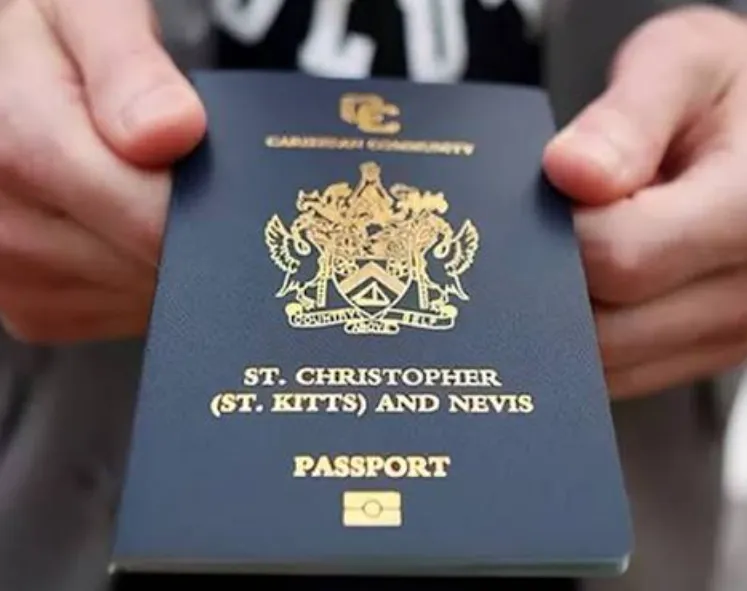
Fast Processing: Compared with the multi-year backlogs common to permanent residence programs in major countries, it is widely recognized as a compliant program through which citizenship can be obtained within a very short time.
Financial Autonomy: St. Kitts and Nevis does not impose personal income tax, capital gains tax, or inheritance tax on its citizens. For high-net-worth individuals seeking to preserve their assets, this means simpler pathways for moving funds and no duplicate taxation.
Low Ongoing Maintenance Costs: It does not require long-term residence on the islands or complex ongoing tax filings; it is, quite simply, a practical tool.
The Practical Benefits Valued by High-Net-Worth Individuals
What they are acquiring is not merely a passport, but the following three practical benefits:
A “Fast Track” for Opening Bank Accounts: When holders of a St. Kitts and Nevis passport open personal accounts with overseas banks—such as those in Singapore, Hong Kong, or Switzerland—their status changes from “resident of a high-risk jurisdiction” to “Caribbean resident,” significantly improving both the likelihood and ease of opening an account.
Convenient Cross-Border Transfers: Used together with an offshore account, it enables personal cash flow to move legally and efficiently, reducing dependence on any single financial system.
Jurisdictional Independence: It provides an additional layer of legal protection for your assets.
Although many applicants view it as merely a travel document,
for highly educated families, its core value lies in providing a safety net through an alternative citizenship.

It creates a tangible buffer for you. If the existing environment experiences severe disruption or regulations suddenly tighten, you will not be left vulnerable because you are locked into a single option.
It is like taking out a high-value insurance policy for your family assets, education planning, and even lifestyle choices. Its value may not be obvious in normal times, but under extreme circumstances, it becomes the last line of defense—protecting your family’s quality of life and ensuring that your children’s education remains uninterrupted.